

Basement Mold Removal in Whitestown, IN
Whitestown's humid continental climate creates persistent moisture challenges throughout the year, particularly in spring and summer when basement dampness becomes a common concern for property owners. Basements and crawl spaces in homes across the area are especially vulnerable to mold growth when moisture control and ventilation fall short, requiring prompt professional attention to protect both the structure and indoor air quality. Alger Mold Remediation connects you with local mold removal providers in Whitestown who can assess basement moisture issues, contain affected areas safely, and perform thorough remediation to restore a healthier living environment.
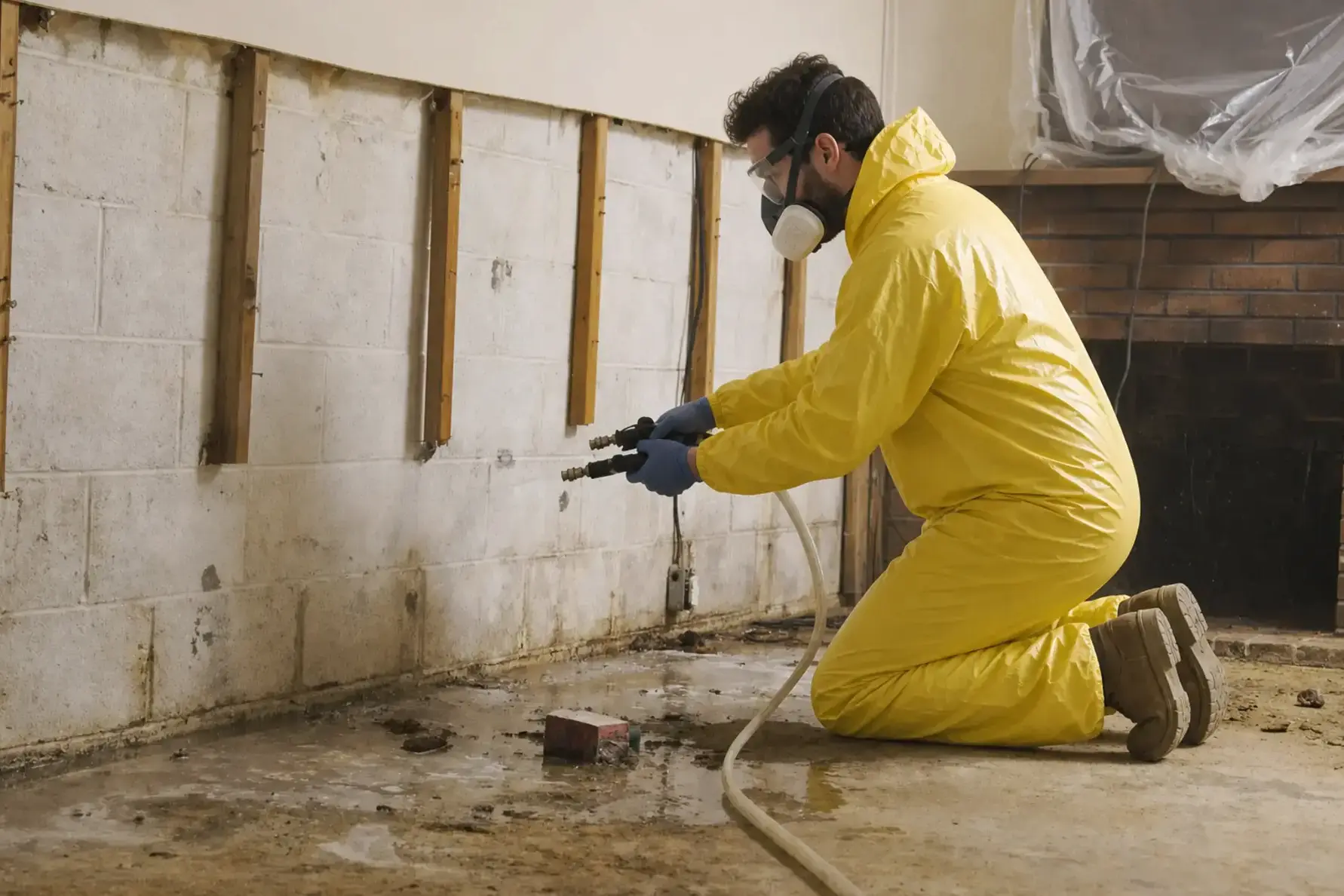
What gets cleaned in a basement, and what comes out
The honest answer to “does this come out, or can it be cleaned?” turns on two things — what the material is, and how many square feet are affected. Those are the two axes of the EPA’s own remediation table, reproduced below for the materials usually found in a basement.
| Material | Under 10 sq ftabout a cabinet door, or one ceiling tile | 10 to 100 sq ftroughly one wall, or a small bathroom | Over 100 sq ftmore than one room's worth of surface |
|---|---|---|---|
| Concrete or cinder blockpoured or block foundation walls and the slabEPA, Table 2 | Wet vacuumHEPA vacuum | Wet vacuumHEPA vacuum | Wet vacuumHEPA vacuum |
| Wallboardfinished walls and any framed partitionsEPA, Table 2 | HEPA vacuum | HEPA vacuumRemove and discard | HEPA vacuumRemove and discard |
| Wood surfacesframing, stair stringers and stored timberEPA, Table 2 | Wet vacuumDamp wipeHEPA vacuum | Wet vacuumDamp wipeHEPA vacuum | Wet vacuumDamp wipeHEPA vacuumRemove and discard |
| Carpet and backingcarpet and pad in a finished basementEPA, Table 2 | Wet vacuumHEPA vacuum | Wet vacuumHEPA vacuumRemove and discard | Wet vacuumHEPA vacuumRemove and discard |
| Books and papersstored books, documents and cardboardEPA, Table 2 | HEPA vacuum | HEPA vacuum | HEPA vacuum |
What those methods mean, in EPA's words
- Wet vacuum
Wet vacuums are vacuum cleaners designed to collect water. They can be used to remove water from floors, carpets and hard surfaces where water has accumulated.
EPA, cleanup methods- Damp wipe
Mold can generally be removed from nonporous (hard) surfaces by wiping or scrubbing with water, or water and detergent.
EPA, cleanup methods- HEPA vacuum
HEPA (High-Efficiency Particulate Air) vacuums are recommended for final cleanup of remediation areas after materials have been thoroughly dried and contaminated materials removed.
EPA, cleanup methods- Remove and discard
Building materials and furnishings that are contaminated with mold growth and are not salvageable should be double-bagged using 6-mil polyethylene sheeting.
EPA, cleanup methods
These guidelines are for damage caused by clean water. If you know or suspect that the water source is contaminated with sewage, or chemical or biological pollutants, then Personal Protective Equipment and containment are required by OSHA.
EPA, Table 1Porous materials that are wet and have mold growing on them may have to be discarded.
EPA, cleanup methodsMold can grow on wood, drywall, carpet and furniture if they remain wet for more than 24 hours.
EPA, flood cleanup
Below-grade walls can pass moisture continuously without ever showing a leak, which is why basement mold often returns after a surface-only cleaning. Concrete and block are the forgiving part — EPA never lists them for removal at any size. The expensive part is whatever was finished or stored against them.
This is not rare locally: Boone County has recorded flood events in 22 separate years, most often in the 2010s, and most recently in 2025. Water that sat years ago leaves growth behind whether anyone found it or not.Source: NOAA Storm Events Database, Boone County (1996-2026; Flood, Flash Flood and Coastal Flood events)
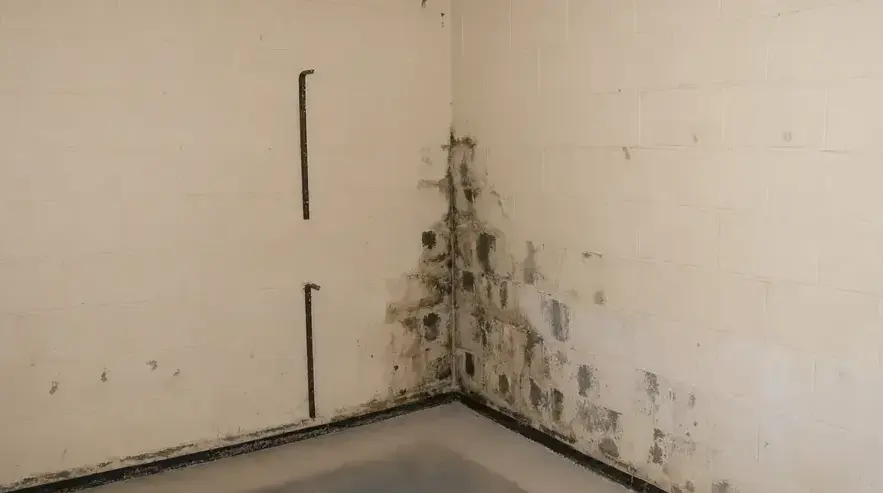
Basement Mold Removal Solutions for Whitestown Homes
Whitestown property owners face persistent moisture challenges year-round, with spring and summer humidity followed by damp conditions that extend through fall, creating sustained pressure on below-grade spaces. Basements in homes throughout Whitestown are particularly vulnerable to moisture intrusion when proper sealing and ventilation aren't in place, making them common sites where mold takes hold. Once moisture finds its way into these spaces, mold can develop quickly and spread across surfaces, compromising indoor air quality and the structural integrity of your home. Basement Mold Removal becomes essential to protect both your property and the health of those living inside.
Alger Mold Remediation connects Whitestown property owners with independent local providers who specialize in thorough basement mold removal and remediation. These professionals begin with a detailed inspection to identify moisture sources, affected areas, and the extent of growth—then develop a removal plan tailored to your specific situation. The process includes safe containment, removal of contaminated materials, and restoration work to return your basement to a healthy state. Follow-up guidance on moisture control and ventilation helps prevent future recurrence, keeping your basement dry and protected long term.
Why Whitestown Homeowners Trust Alger for Basement Mold Removal
Fast Local Basement Mold Removal
Alger connects Whitestown property owners with independent local providers who respond quickly to basement mold concerns. Prompt action prevents moisture from spreading and protects your home's structural integrity and indoor air quality.
Thorough Basement Mold Removal Process
Connected providers assess the full scope of basement mold growth, identify moisture sources, and remove affected materials carefully. Clear communication throughout ensures you understand each removal step and the measures taken to prevent recurrence.
Basement Mold Removal with Proper Containment
Independent providers Alger connects to use containment protocols during basement mold removal to keep spores from spreading to other areas. Proper removal protects your family and reduces the risk of regrowth in untreated spaces.
Year-Round Moisture Pressure in Basements
Central Indiana's persistent humidity—especially during spring and summer—creates sustained moisture conditions in basements. Alger helps Whitestown homeowners address mold growth driven by this regional moisture pattern through thorough removal and source control.
How Our Basement Mold Removal Process Works
Schedule Your Basement Mold Removal Visit
Contact Alger Mold Remediation to describe your basement mold concerns and connect with a local provider near Whitestown. The provider will arrange a time to inspect your basement and identify moisture sources fueling mold growth.
Get a Basement Mold Assessment
A local mold inspection specialist will evaluate your basement for active mold, moisture intrusion points, and ventilation gaps—common problems in Whitestown homes where spring and summer humidity creates persistent damp conditions. You'll receive findings and removal options tailored to your basement's specific situation.
Begin Basement Mold Removal and Restoration
The independent provider will contain affected areas, safely remove mold-damaged materials, and apply remediation techniques to restore your basement's air quality and integrity. Follow-up guidance on moisture control helps reduce the conditions that allowed basement mold to develop.
Dealing with Basement Mold Removal in Whitestown? Get fast, professional help.
Call Now — (317) 597-6857Basement Mold Removal Across Whitestown
Whitestown's central Indiana location brings persistent moisture challenges that make basement mold removal a common need for homeowners. Spring and summer humidity levels remain elevated throughout the season, and damp conditions extend well into fall, keeping basements and crawl spaces under continuous moisture pressure. Homes with full basements are particularly vulnerable during these periods, as ground-level construction naturally draws in moisture from soil and surrounding air—especially when ventilation is inadequate or foundation seals deteriorate over time. Without proper drainage and air circulation, the combination of seasonal humidity and below-grade moisture creates an environment where mold can establish and spread.
When mold develops in a basement, prompt removal is essential to protect both the structural integrity of your home and indoor air quality. The independent local providers in the Alger network can assess moisture sources, recommend containment measures during removal, and help restore healthy basement conditions. Whether you're dealing with isolated growth or more extensive affected areas, connecting with a provider who understands Whitestown's moisture patterns ensures the removal process addresses root causes, not just visible symptoms.
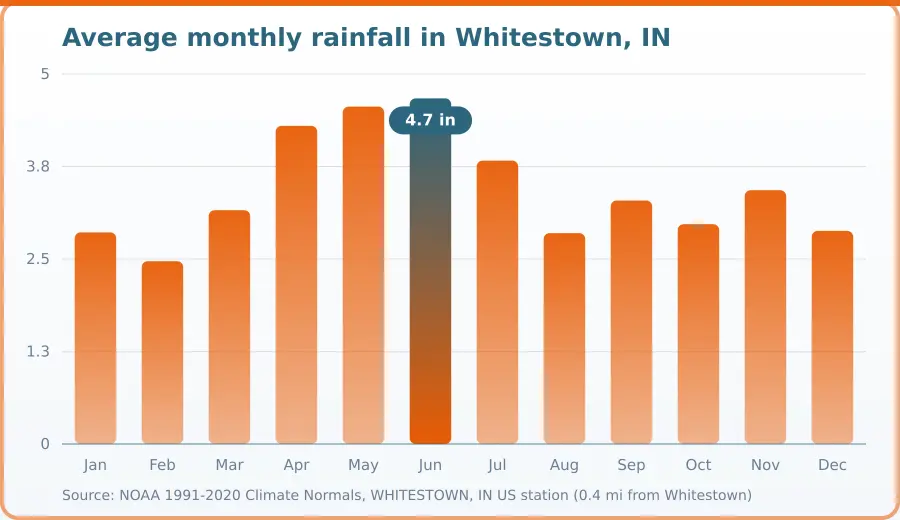
| Period | Monthly rainfall (in) |
|---|---|
| Jan | 2.9 |
| Feb | 2.5 |
| Mar | 3.2 |
| Apr | 4.3 |
| May | 4.6 |
| Jun | 4.7 |
| Jul | 3.8 |
| Aug | 2.9 |
| Sep | 3.3 |
| Oct | 3 |
| Nov | 3.4 |
| Dec | 2.9 |
Source: NOAA 1991-2020 Climate Normals, WHITESTOWN, IN US station (0.4 mi from Whitestown). Retrieved October 5, 2026.
Basement Mold Removal Through Whitestown's Four Seasons
Spring: Melting & Moisture
As snow and ice melt, basement mold growth accelerates due to rising groundwater and increased moisture infiltration through foundation walls and floors. Alger Mold Remediation connects Whitestown property owners with local providers who assess water entry points and recommend removal and moisture-control strategies before summer humidity peaks.
Summer: Peak Humidity
High humidity throughout central Indiana's summer months creates ideal conditions for basement mold to spread rapidly, especially in homes where crawl spaces or full basements lack proper ventilation or sealing. Local providers in the Alger network address active mold colonies and recommend dehumidification solutions tailored to below-grade spaces.
Fall: Lingering Dampness
Damp conditions persist into autumn across the region, and as temperatures drop, condensation on basement walls and pipes intensifies mold activity before winter dormancy sets in. Alger Mold Remediation helps property owners schedule removal and inspect drainage systems before cold weather traps moisture underground.
Winter: Hidden Growth
Cold, sealed basements create stagnant, humid microclimates where mold continues to grow unnoticed beneath stored items and behind walls, while outdoor moisture sources remain frozen. Connecting with a local provider through Alger ensures thorough inspection and removal planning can begin as soon as spring thaw approaches.
Basement Mold Removal FAQs — Whitestown, IN
Basement mold removal begins with a thorough inspection to identify affected areas, moisture sources, and the extent of growth. The independent provider will contain the affected zone, remove contaminated materials safely, apply remediation treatments, and address underlying moisture issues. The goal is complete removal and prevention of regrowth through proper ventilation and drainage solutions tailored to your home.
Alger Mold Remediation works to match you with local basement mold removal providers in Whitestown promptly. Response times depend on provider availability and the complexity of your situation. Contact Alger to discuss your needs, and they'll connect you with independent providers ready to assess and address your basement mold concern.
Basement mold removal pricing depends on the affected area's size, mold type, extent of structural damage, underlying moisture sources, and remediation approach needed. Factors like accessibility, ventilation upgrades, and drainage repairs also influence cost. Each independent provider will assess your specific situation and provide a detailed estimate based on their findings.
Before basement mold removal starts, secure or relocate personal items stored in the affected area. Ensure clear access for the provider and their equipment. Discuss containment procedures beforehand—the provider will seal off the work zone to prevent spore spread to other areas. Keep family members and pets away from the basement during active remediation work.
After removal, maintain basement dryness by ensuring proper grading around your foundation, maintaining gutters and downspouts, and sealing cracks in walls or floors. Improve ventilation and consider a dehumidifier if moisture persists. Monitor humidity levels and address any new water intrusion immediately. The provider may recommend ongoing drainage or sump pump solutions during remediation.
Whitestown's humid spring and summer months, with damp conditions extending into fall, create sustained moisture pressure on basement spaces. High humidity year-round makes basements vulnerable to mold growth if not properly sealed and ventilated. Address basement mold promptly whenever discovered; delayed removal allows moisture and growth to worsen during peak humidity periods.
Related Services
Homeowner Safety Toolkit
Verify Your Whitestown, IN Mold Remediation Company
Before you hire anyone, use these independent national resources to confirm credentials, standards, and track record.
EPA
The federal government's own guidance on identifying, cleaning up, and preventing mold growth in a home.
Mold Prevention GuideBBB
Look up any mold remediation company's complaint history, customer reviews, and accreditation status — a free, independent check before you hire.
Check StandingCDC
Covers the health effects of mold exposure and safe cleanup practices, separate from the remediation work itself — useful if anyone in the home has respiratory symptoms.
Mold Health GuideDealing with Basement Mold Removal in Whitestown, IN? Call (317) 597-6857 for 24/7 help.
Call Now — (317) 597-6857Areas We Serve in Whitestown, Indiana
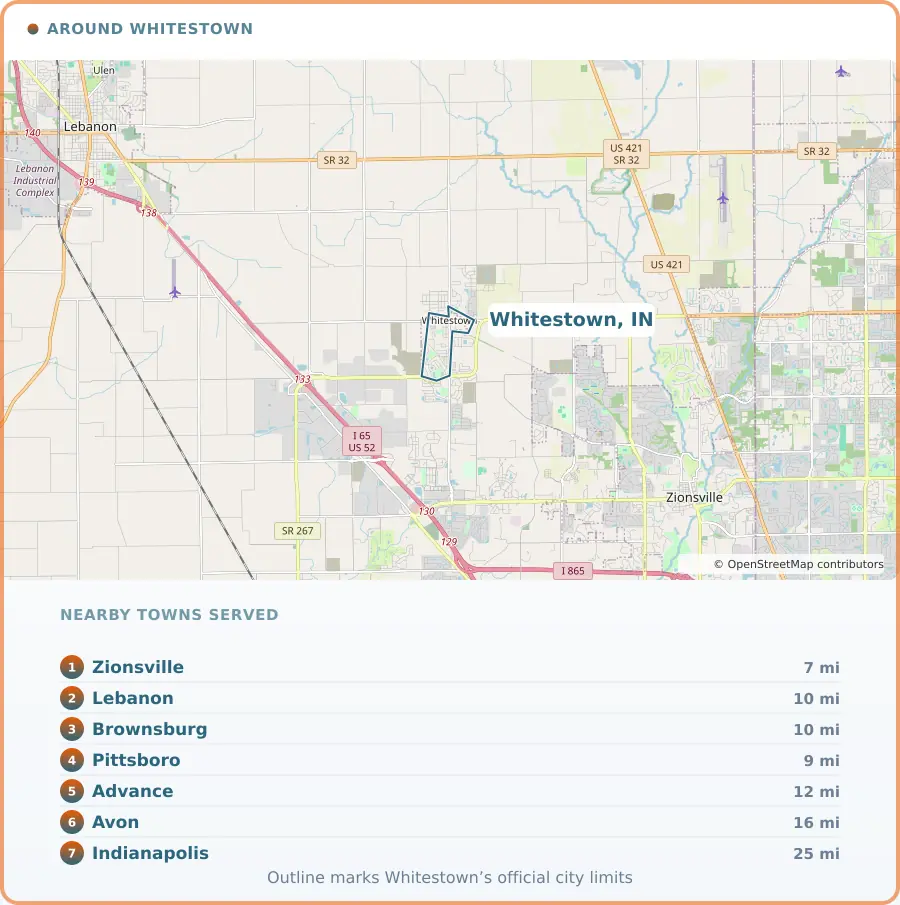
Serving Whitestown, IN and 7 communities around it. Local knowledge of how each area is built shapes how the work is handled there.
Whitestown, IN Information
Just northwest of Indianapolis, Whitestown, IN has become one of the fastest-growing towns in the metro area, with a population now topping 10,000 and climbing. Much of that momentum traces back to the Anson development, which has pulled in major logistics and distribution operations, including a large Amazon fulfillment center, alongside employers like Kroger, Essendant, and O'Reilly Auto Parts.
The town's character blends small-town Boone County roots with the energy of a community building itself in real time. New neighborhoods rise alongside working farmland, while warehousing, residential construction, and local government jobs keep pace with the growth. It's a place still rooted in Indiana agriculture even as it becomes a regional hub for e-commerce and distribution.
Photo: Billy Hathorn, CC BY-SA 3.0